By the Chess67 TeamUpdated 2026-08-30We make Chess67
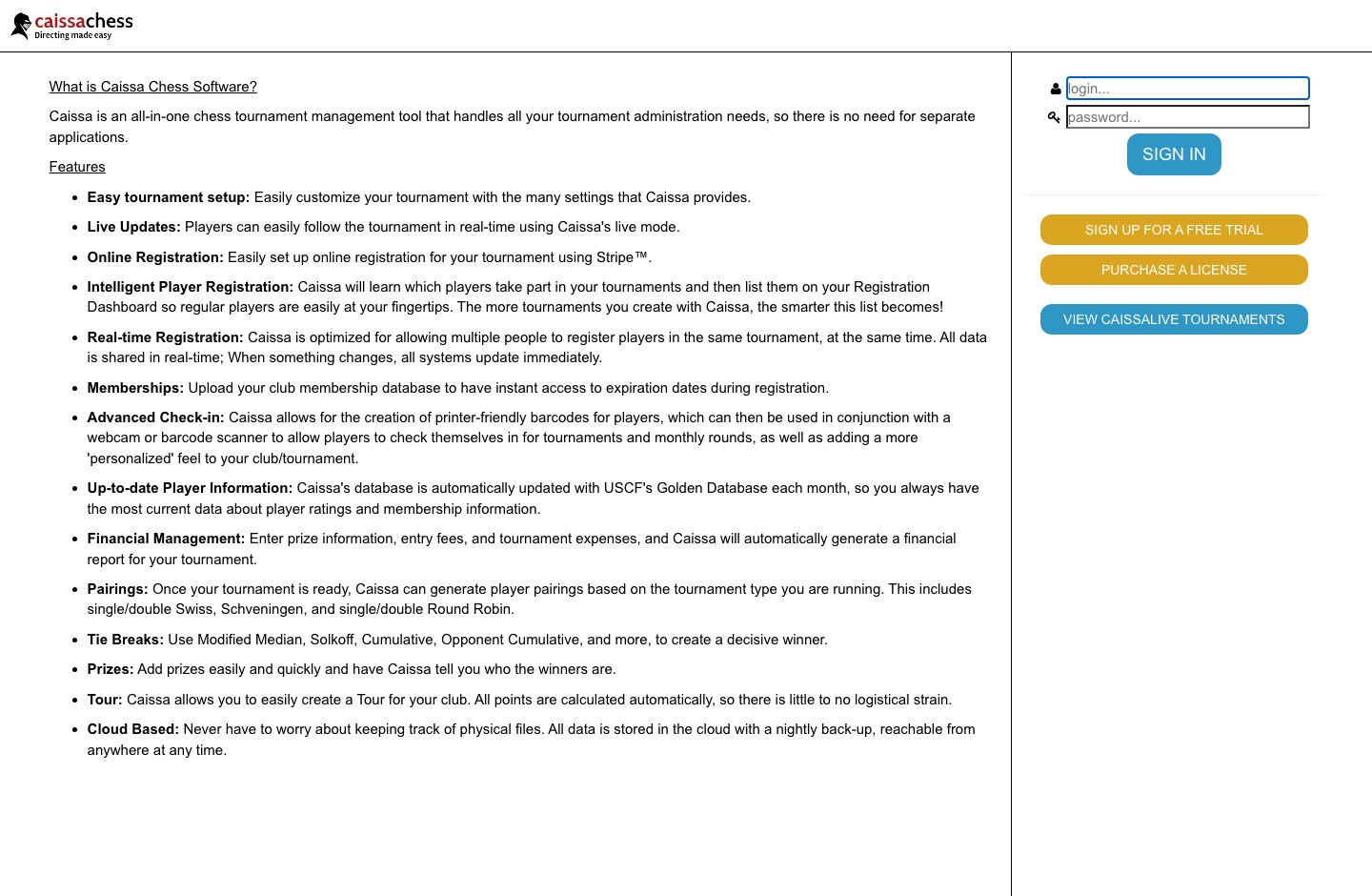
Caissa (caissachess.net) provides US tournament registration, Stripe or Square checkout, Swiss and round-robin pairings, live standings, and native USCF DBF exports. It also includes memberships, email/SMS alerts, check-in, prize and financial reports, tours, and shared administration.
Chess67 includes memberships and player messages too, plus parent-managed child profiles, a storefront, and coach discovery. Caissa offers a single-tournament free trial and a $100 annual license. Chess67's core tournament tools have no base subscription, with a standard 2% fee on processed sales plus processor charges.
Summary
Both cover pairings, live standings, and USCF reports. Caissa offers season-long tours and a $100 annual license. Chess67 offers parent-managed profiles and a storefront, with a standard 2% fee on processed sales plus processing and no base subscription for core tournament tools.
Consider Chess67 if
Parents need one account to register and manage their children.
Your club needs a storefront, coach discovery, posts, and custom pages.
You prefer a 2% fee on processed sales to a base annual organizer license.
You need member attendance, payment, and engagement views, subject to plan allowances.
Consider Caissa if
You use prize and financial reports, barcode/webcam check-in, and USCF rating syncs.
You want built-in tours and series scoring across a season.
You prefer an annual license that does not renew automatically.
Try Chess67 for one event. Check registration, pairings, and reporting before moving other events from Caissa.
*Core club and tournament tools have no subscription fee. Chess67's standard fee is 2% on processed sales, plus payment processing. Optional paid club plans increase messaging, member insight, and custom page limits. See the pricing page. Eligible nonprofits can apply for discounted processing rates; see Stripe's eligibility requirements.
The free Pawn plan includes an unlimited roster, 500 emails and 50 SMS per month, insights for 50 families (linked children included), and one custom club page. Paid plans raise these limits and add unlimited pages and Offline Mode (beta) for tournaments. Messages remain subject to recipient preferences and delivery restrictions.
Venmo appears only where PayPal marks it eligible: US merchant and buyer, USD checkout, supported browser/device, and the Venmo app installed. PayPal eligibility docs
From registration to rating reports
Chess67 uses the same roster for registration, pairings, and results. Directors review and submit rating reports outside Chess67. Joining a club during signup is optional.
Chess67 event tools
Registration, pairings, and results share a roster
1
Club & event website
Public pages for your club and events
Schedules, location maps, sections, and entry lists
Drag-and-drop club page builder; one custom page on the free plan
Caissa supports this stage
2
Registration & payment
Sections with their own pricing, eligibility, and bye requests
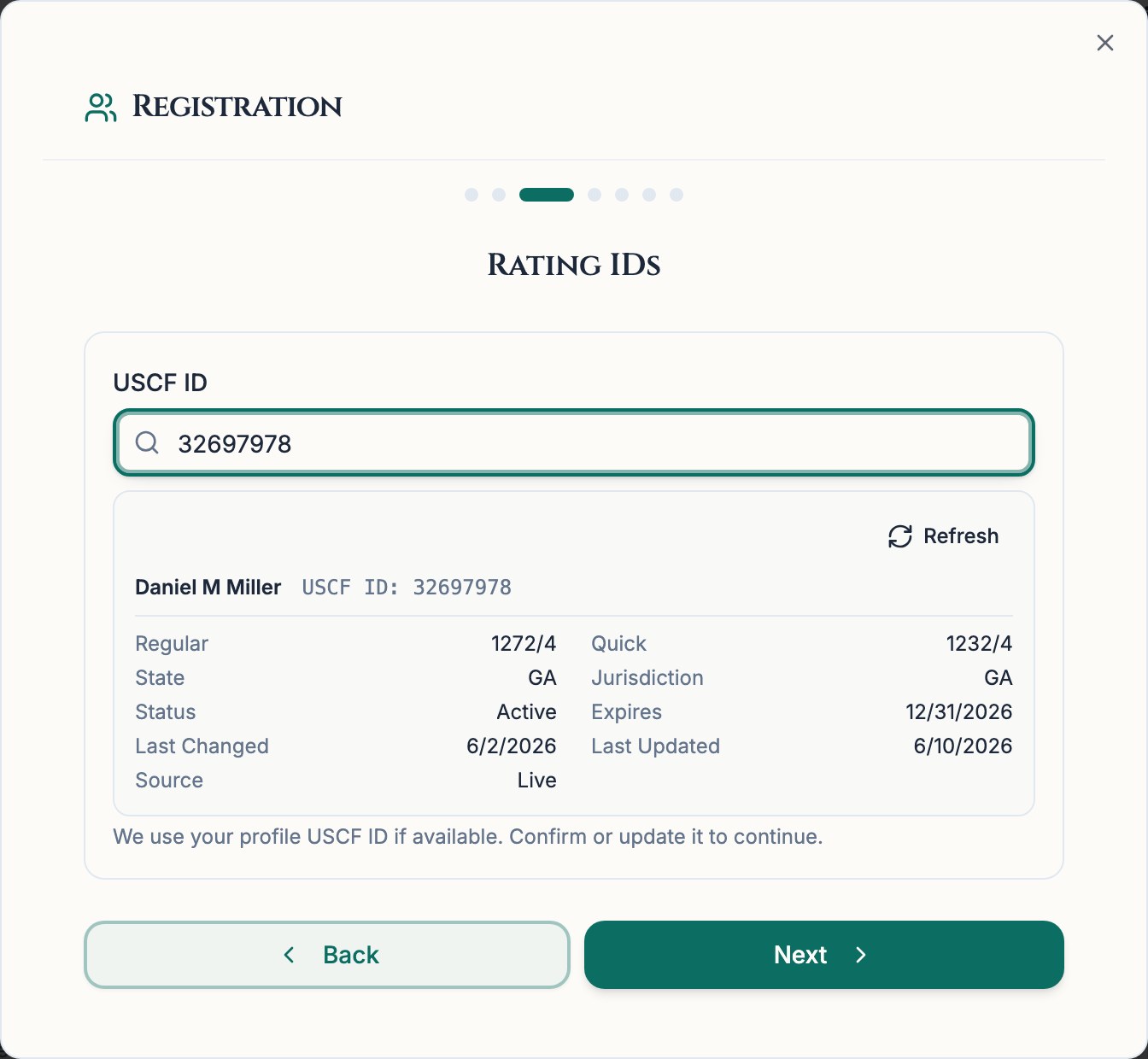
Family checkout, custom questions, and configurable USCF membership checks
Stripe or PayPal checkout at signup
Caissa supports this stage
3
Tournament day
QR-code check-in for players and families
Swiss, round robin, and quad pairings with USCF tiebreaks
Result entry for staff, plus an optional self-serve kiosk
Caissa supports this stage
4
Rating report preparation
Compliance checks mapped to USCF rule numbers
Three-file USCF DBF package for director review and submission
FIDE TRF preparation; Chess67 is not FIDE-certified
Caissa supports this stage
Markers show where a product or its companion service has relevant features. This does not mean it includes every Chess67 feature listed; check the comparison notes for details.
Returning players and club members
reuse profiles at the next event
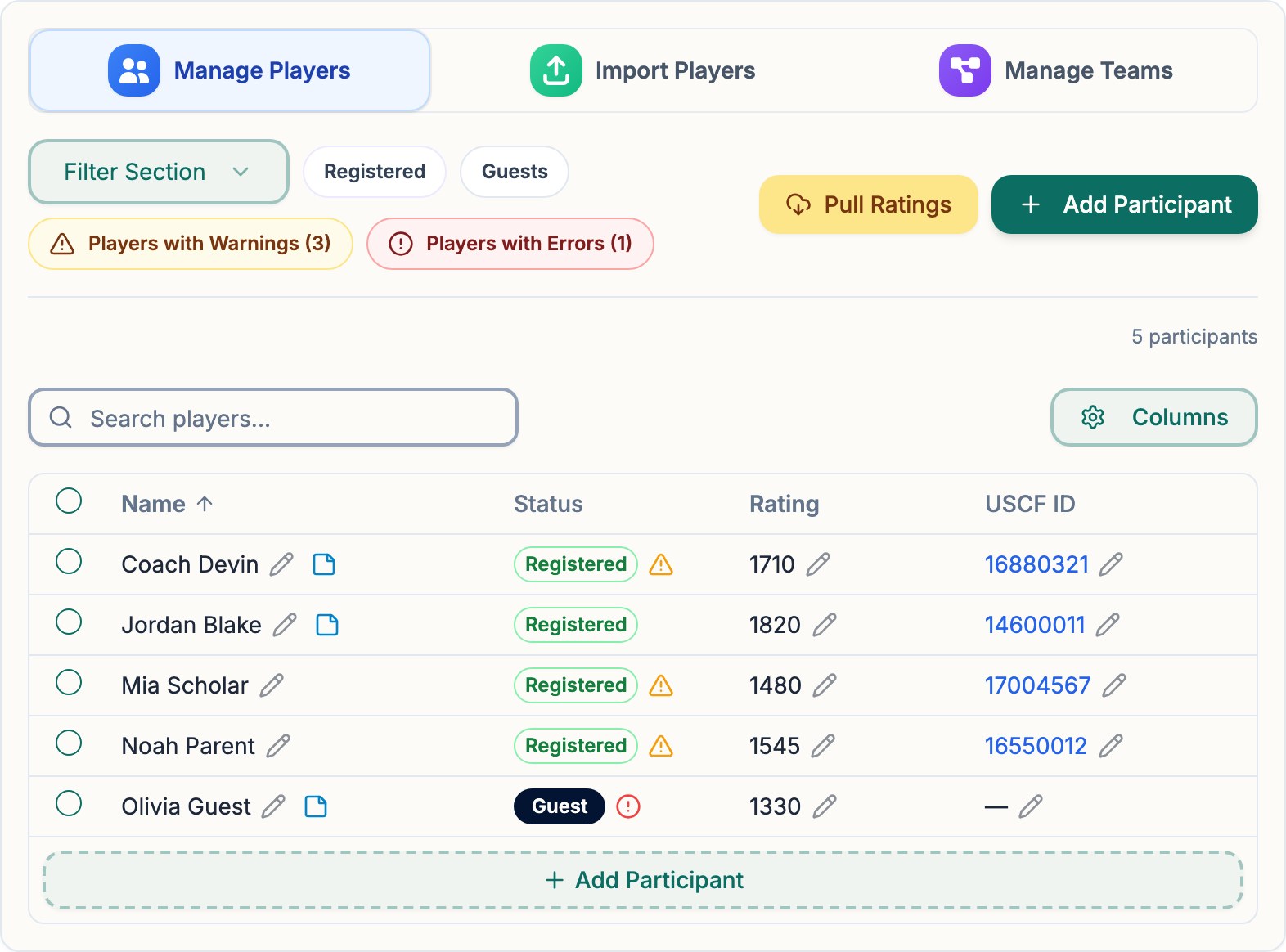
Player profiles retain registration history. Players can also join eligible clubs during signup; registration alone does not create a club membership.
Returning player and parent-managed child profiles
Membership groups and dues collection
Email and SMS within your plan's allowances
Member history and engagement reports within your plan's limits
Caissa: Caissa provides registration, pairings, live standings, USCF reports, and memberships. Chess67 also includes parent-managed profiles, a storefront, member history, and coach discovery.
Key differences
01
USCF reports and director tools
Both provide pairings, results, check-in, and native USCF DBF exports. Caissa also includes prize and financial reports. Chess67 exports reports for review and external submission, with membership checks during registration and pre-export USCF checks.
02
Families and member records
Caissa keeps club rosters and memberships between events. We could not verify reusable parent/child accounts or engagement CRM in its public documentation. Chess67 has parent-managed child profiles and member history, with communication and CRM allowances based on plan.
03
Annual license or sales fees
Caissa's annual license is $100. Chess67 charges its standard 2% on processed sales and no sales fee for free-entry events. Add processor costs and any optional Chess67 club plans or message usage to the budget. Club plans and usage charges can apply even when entry is free.
Screenshots
Screenshots show the pages linked below and may include older prices or features. Use the dated source notes for current details.
Chess67
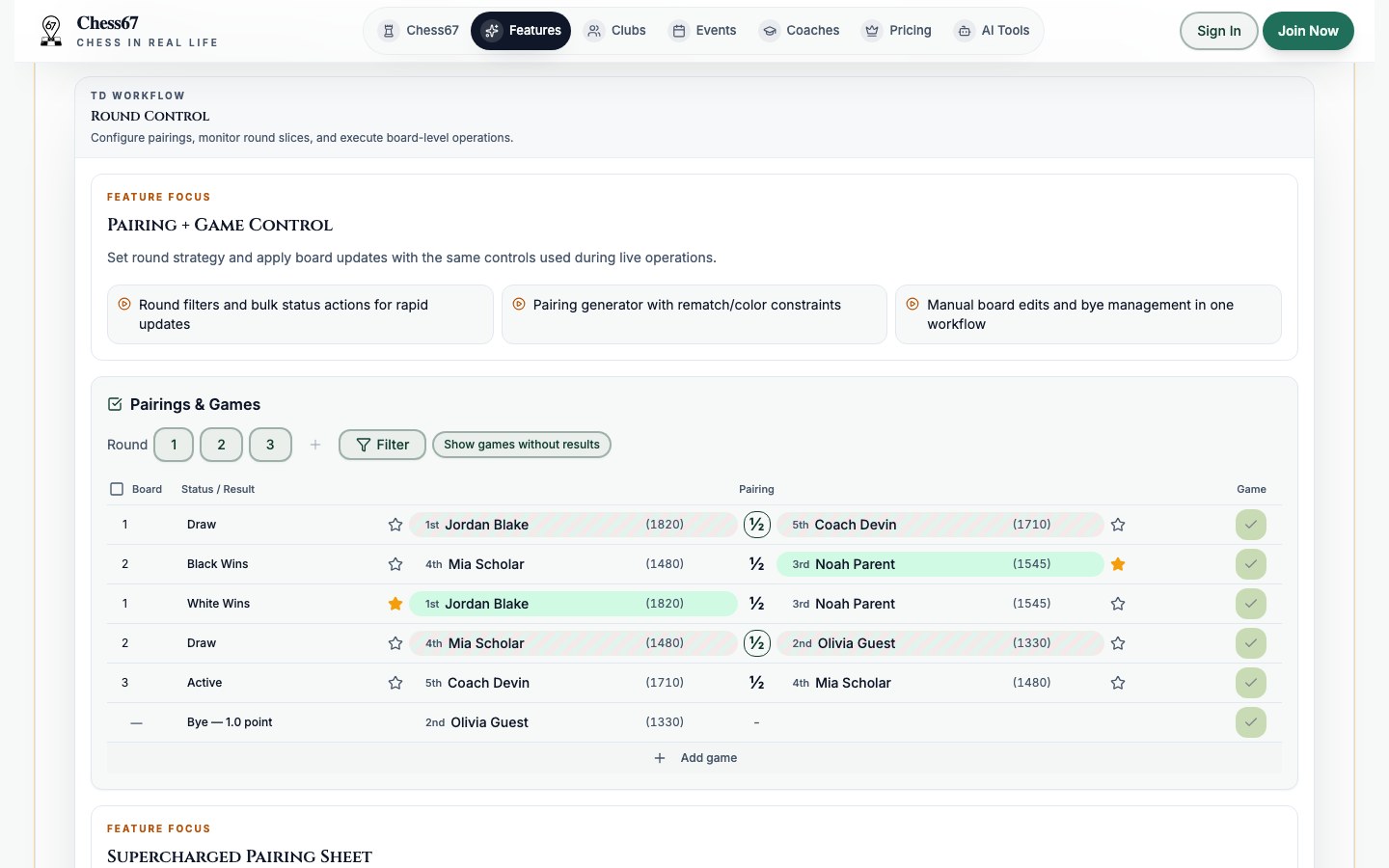
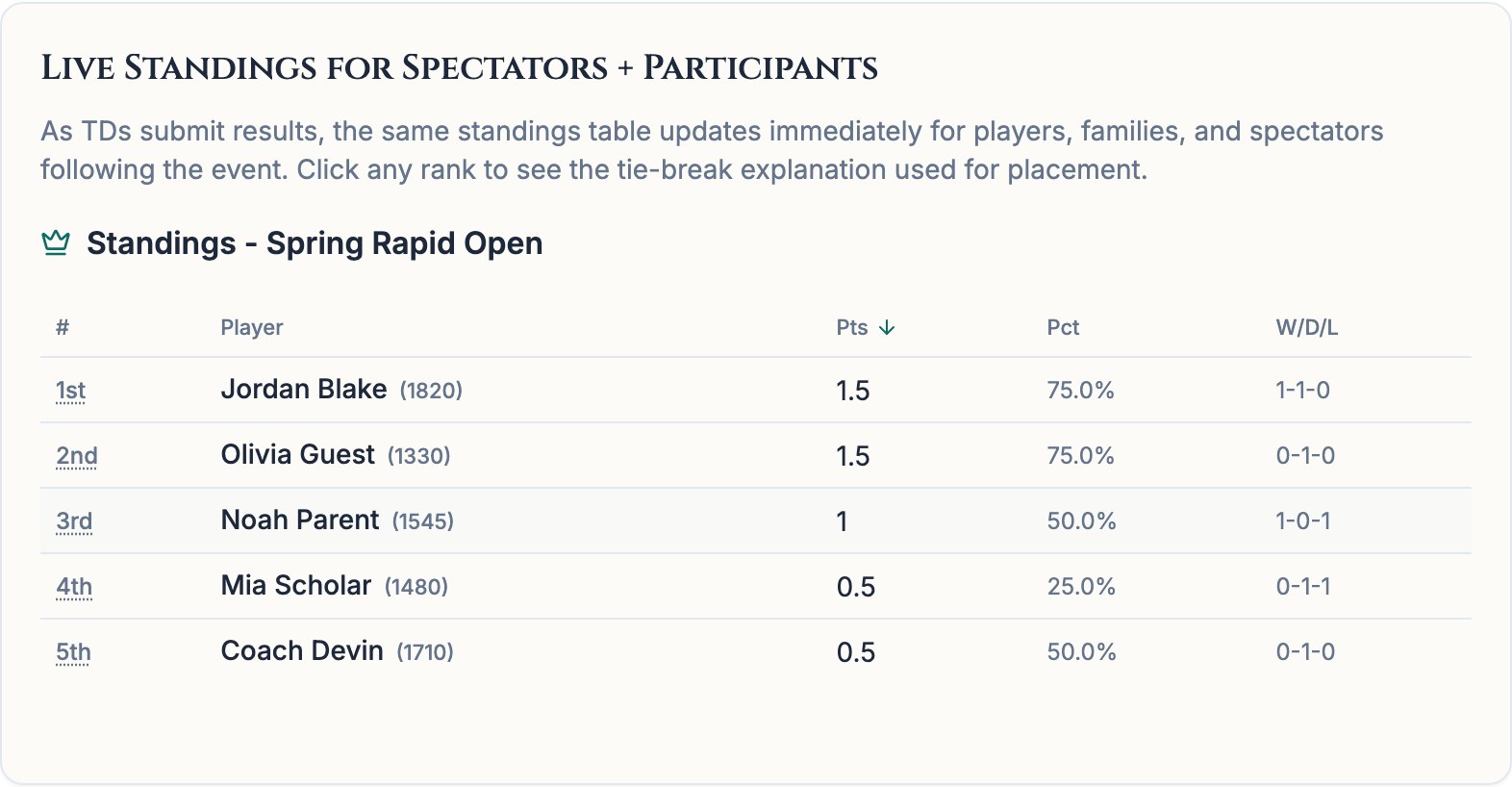
Chess67's round controls for pairings, results, and byes, shown with sample data.
Yes = Documented support; paid tiers and usage allowances are noted. Partial = Documented support with functional limits or a companion tool. No = Outside the product's documented scope. Not verified = Not verified from the public documentation reviewed.
FIDE report support means file preparation. Chess67 is not approved, certified, or endorsed by FIDE. Confirm reporting requirements with your arbiter or federation.
Offline Mode is in beta and included with the Bishop plan ($15/mo billed yearly) and above. Prepare the tournament on one device while online. You can then pair rounds and enter results without a connection. Check-in, registration, payments, rating lookups, and public updates still need internet. Review and sync saved changes when you reconnect.
Common questions
Try Chess67 with your event
Create a tournament page, add a sample roster, and test pairings and reporting before using it for a live event.
We make Chess67. We checked competitors' public documentation and Chess67's source code. We haven't tested every product or confirmed the production availability of every feature. Source links include the date checked.
“Yes” means documented support. Required plans and usage limits are noted for every product, including Chess67.
“Partial” means a functional limitation or a separate companion product is involved. Each note explains which.
“No” means the feature is outside the product's documented scope. “Not verified” means we couldn't confirm it; the feature may still exist.
SwissSys includes ChessRoster and Swiss-Manager includes Chess-Results where noted. Pairing support requires a built-in engine; roster exports and hosted reports are listed separately.
Screenshots illustrate the interface. Check the dated sources for current pricing and features.